


Wild Prickly Lettuce: A Humble Healer from the Wild

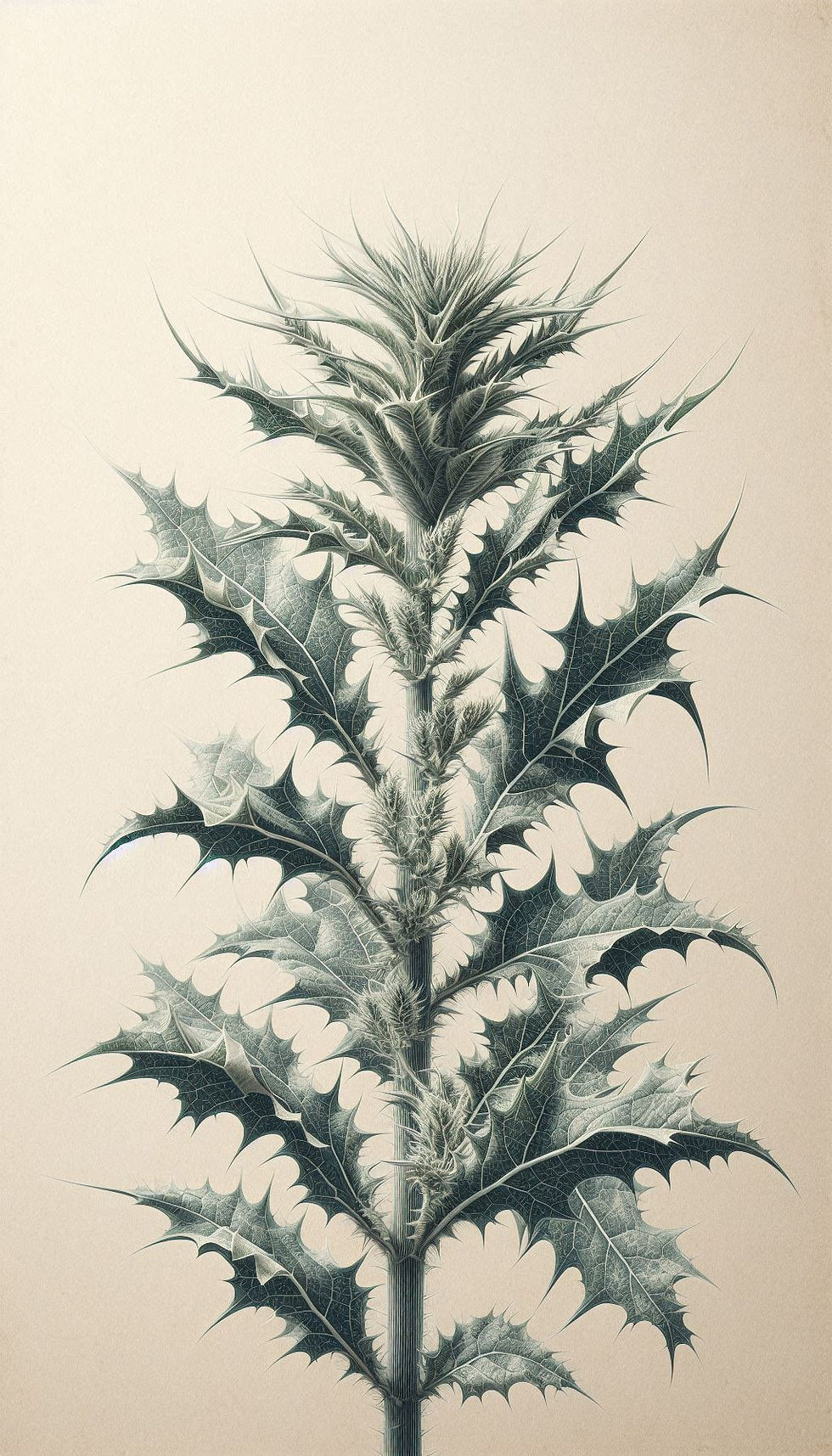
Wild Prickly Lettuce (Lactuca serriola), often overshadowed by its domesticated cousin, garden lettuce, carries a surprising legacy of healing, myth, and spirit. Though commonly seen waving along roadways and field edges, this plant is much more than a humble weed; it’s a wild botanical kin to our leafy salads with a history of medicinal use, cultural symbolism, and transformative energy. In this post, we’ll explore how this prickly little plant has earned its place in herbal lore and how you might appreciate it as both healer and teacher in your own garden and practice.

Propagation & Native Habitat
Wild Prickly Lettuce is native to Eurasia and North Africa, where it originally grew in disturbed soils and open fields before spreading worldwide through naturalization. Today it thrives in temperate regions across the globe, appearing along roadsides, fields, and waste places.
Propagation is simple and seed-based — the plant produces abundant seed heads that disperse on the wind much like dandelions. These seeds germinate readily in bare or disturbed soil, making Prickly Lettuce a resilient self-sowing species wherever suitable conditions prevail.
History & Folklore
Wild Prickly Lettuce has wandered through human story just as faithfully as it has along our roadsides. Though we know it botanically as Lactuca serriola, its lineage dates back to ancient, cultivated lettuces and to the shared symbolic language of bitterness, sleep, fertility, and death.
In classical Greece, lettuce carried layered meaning. The tragic myth of Adonis tells that after his fatal wounding, he was laid upon a bed of lettuce by Aphrodite. Ancient writers such as Plutarch and Athenaeus mention lettuce in connection with funerary rites and seasonal rites of Adonis. Because lettuce was believed to cool passion and dampen vitality, it became paradoxically associated both with erotic love and with impotence and death. The plant’s milky sap, suggestive of both nourishment and sterility, deepened its symbolic ties to the fragile boundary between life and loss.
The Romans inherited and elaborated these associations. Pliny the Elder, in his Natural History, wrote of lettuce as both a sleep aid and a digestive herb, noting its ability to calm the body. Dioscorides, in De Materia Medica, described wild and cultivated lettuces as cooling, soporific, and useful for quelling desire and easing restlessness. These early medical texts cemented lettuce’s reputation as a plant that quiets excess, whether excess heat, excess passion, or excess wakefulness.
Long before Greece and Rome, lettuce was sacred in ancient Egypt. Wall paintings and temple carvings depict tall lettuces offered to the fertility god Min. Unlike the later Greek association with dampened desire, Egyptian symbolism emphasized vitality and generative force. The upright growth habit and abundant latex were seen as signs of virility and life power. Archaeological and textual evidence suggests lettuce was cultivated ceremonially, offered in temples, and connected to agricultural renewal cycles along the Nile. The plant thus held a dual symbolism across cultures: fertility and potency in one context, cooling restraint and mortality in another.

During the medieval period in Europe, wild lettuces retained their medicinal identity. Monastic herbals referenced their sleep-inducing qualities, and the dried latex, later called lactucarium, was used as a mild anodyne. By the 18th and 19th centuries, preparations of wild lettuce appeared in European and American pharmacopeias as a gentler alternative to opium, earning it the folk name “lettuce opium.” Eclectic physicians in 19th-century America employed it for nervous irritability, cough, and insomnia, further weaving it into practical folk medicine traditions.
In rural folk belief, bitter herbs often symbolized purification and protection. Because wild lettuce grows in disturbed soils and liminal places, edges of fields, roadsides, and abandoned ground, it came to represent resilience and survival. Some European folk traditions associated bitter plants with warding off harmful influences, while in North American folk herbalism, wild lettuce became a quiet ally for those suffering from “overwrought nerves” in an increasingly industrial world.
Across time and geography, one thread remains consistent: lettuce cools. Whether cooling passion in Greek myth, cooling inflammation in Roman medicine, or cooling restless minds in American folk practice, its energetic signature has long been understood as tempering excess. The bitterness that puckers the tongue became a metaphor for the bittersweet truths of life, love and loss, vitality and decline, wakefulness and surrender.
In this way, Wild Prickly Lettuce stands not only as a medicinal plant but as a botanical storyteller, carrying humanity’s reflections on fertility, restraint, sleep, mourning, and transformation through the centuries.

Medicinal Properties & Parts Used
The medicinal reputation of Wild Prickly Lettuce rests primarily in its milky latex and aerial parts (leaves and stems). When the plant is cut, it exudes a white sap that dries into a brownish substance traditionally called lactucarium. This latex contains bitter sesquiterpene lactones, most notably lactucin and lactucopicrin, along with smaller amounts of related compounds such as 11β,13-dihydrolactucin. These constituents are largely responsible for the plant’s sedative, analgesic, and calming effects documented in both historical texts and modern phytochemical investigations.
Research into lactucin and lactucopicrin has demonstrated measurable analgesic and sedative activity in animal models, suggesting central nervous system activity without the respiratory depression associated with opiates. While this does not make wild lettuce an opioid substitute, it helps explain why 19th-century physicians sometimes referred to lactucarium as “lettuce opium.”
Key Medicinal Actions
Sedative & Hypnotic
Wild lettuce has long been used to calm restlessness and encourage sleep. Dioscorides described lettuce as sleep-inducing in De Materia Medica, and Pliny the Elder echoed this in Natural History. Later European herbalists such as Nicholas Culpeper categorized lettuce as cooling and soporific. Modern herbalists continue to employ it for insomnia linked to nervous tension, overthinking, or irritability, particularly when heat and agitation are present.
Analgesic
Lactucarium was listed in the 19th-century United States Pharmacopeia and National Formulary as a mild analgesic and sedative. Eclectic physicians such as Harvey Wickes Felter described it as useful for dull, persistent pain, dry coughs, and nervous irritation. Its analgesic properties are considered mild to moderate, appropriate for tension headaches, muscular discomfort, menstrual cramping, and general somatic tension, particularly when pain is worsened by anxiety or sleeplessness.
Antispasmodic
Traditional herbal texts note its usefulness in spasmodic coughs, bronchial irritation, and muscular tension. The relaxing effect on smooth muscle may explain its historical use in whooping cough and irritable cough patterns. Eclectic and early American dispensatories frequently paired it with expectorant or demulcent herbs for respiratory formulas.
Nervine (Calming Trophic for the Nervous System)
Wild lettuce is often categorized as a relaxing nervine, an herb that soothes the nervous system without heavy sedation when used appropriately. It has been used for:
Restlessness with irritability
Stress-induced tension
Emotional agitation
Difficulty “winding down” at night
Its energetic profile in traditional Western herbalism is considered cooling, drying, and bitter, making it especially suited to constitutions characterized by excess heat, tension, and overstimulation.

Parts Used in Herbal Practice
Leaves & Stems (Aerial Parts)
The upper flowering tops, leaves, and stems are harvested when the plant is nearing bloom, as latex concentration increases at this stage. These parts are used:
Fresh or dried in tincture
Infused as tea (though quite bitter)
Incorporated into glycerites or fluid extracts
While tea can be prepared, tincture is generally preferred because many of the active compounds extract more efficiently in alcohol.
Latex (Lactucarium)
The milky sap is collected by scoring the stems and allowing the latex to dry before gathering. Once dried, it forms a resinous substance historically used in pill or tincture form. Lactucarium was official in the U.S. Pharmacopeia from 1820 until the early 20th century. It was described as:
Mildly hypnotic
Anodyne
Antitussive
Though largely abandoned in conventional medicine after the rise of synthetic sedatives, it remains part of traditional Western herbal practice.
Safety & Considerations
While Wild Prickly Lettuce has a long history of use, modern human clinical trials are limited. Most contemporary understanding comes from historical documentation, phytochemical analysis, and animal studies.
Important considerations:
Correct identification is essential; several Lactuca species resemble one another.
High doses may cause nausea, dizziness, or excessive sedation.
It should not be combined recklessly with other sedatives or central nervous system depressants.
Avoid during pregnancy and lactation due to insufficient safety data.
It is best approached as a gentle, supportive herb, not a replacement for prescription analgesics or sleep medications.
Spiritual & Metaphysical Properties
Beyond its measurable chemistry and historical medicine, Wild Prickly Lettuce carries a quieter, symbolic current. Across folk magic, Western esoteric herbalism, and modern earth-based spirituality, bitter herbs have long been associated with cooling excess, clarifying perception, and strengthening spiritual boundaries. Wild lettuce, with its lunar flowers and sleep-inducing sap, naturally found its place in this lineage.
While historical grimoires more frequently reference cultivated lettuce (Lactuca sativa), wild lettuce inherited many of the same correspondences through shared energetics: cooling, sedating, and dream-inducing.
Dreamwork & Altered States
Because of its long-standing reputation as a sleep herb, wild lettuce became associated with dream enhancement, trance states, and visionary rest. In classical antiquity, lettuce was believed to quiet sexual passion and calm the mind, a cooling influence that prepared the body for surrender. Writers such as Dioscorides and Pliny the Elder documented its sleep-promoting qualities, laying the groundwork for its later magical associations.
In modern Western magical herbalism, authors such as Scott Cunningham (in Encyclopedia of Magical Herbs) associate lettuce with:
Sleep magic
Prophetic dreams
Lunar workings
Protection during astral travel
Because the plant quiets mental chatter, some contemporary practitioners use it symbolically, or in very mild supportive preparations, before meditation, divination, or dream incubation rituals. It is often aligned with Water element and Moon energy, reinforcing its connection to intuition, subconscious work, and emotional tides.
Protection & Boundaries
Bitter herbs traditionally signify purification and the clearing of stagnant or intrusive influences. In European folk traditions, bitter plants were sometimes planted near thresholds or carried for protection, not necessarily because of dramatic magical lore, but because bitterness itself symbolized discernment and boundary-setting.
Wild lettuce’s growth pattern reinforces this symbolism. It thrives in disturbed soils and liminal spaces, roadsides, field edges, abandoned lots, places that exist between order and wildness. In contemporary earth-based spirituality, this has led to its association with:
Strength in adversity
Grounded resilience
Emotional boundary reinforcement
Protection during vulnerable spiritual work
In energetic herbalism traditions influenced by writers such as Matthew Wood, cooling bitter herbs are often described as drawing down excess heat, metaphorically cooling anger, agitation, and psychic overwhelm. Thus, wild lettuce may be invoked symbolically when one needs to “cool” charged emotional fields or step back from reactive states.

Transformation & Mourning
The mythic association with Adonis and Aphrodite gives lettuce a poignant place in ritual symbolism. Ancient sources, including Plutarch, describe lettuce in connection with the Adonia, rites of mourning and seasonal death. In this context, lettuce symbolized:
The fragility of life
The cooling of passion after loss
The descent into grief
The cyclical return of vitality
Unlike plants that blaze brightly in solar symbolism, wild lettuce speaks of the waning moon, the quiet season, the necessary stillness between endings and beginnings. Modern practitioners sometimes incorporate it (symbolically rather than pharmacologically) into rituals of:
Grief processing
Ancestral remembrance
Shadow integration
Seasonal transitions (especially late summer into autumn)
Because it embodies both fertility symbolism in ancient Egypt, particularly in devotion to Min, and mortality symbolism in Greek myth, wild lettuce becomes a plant of paradox: life force and decline, passion and cooling, vitality and surrender. That duality makes it a contemplative ally for those working through transformation.
Resilience & Quiet Strength
Spiritually, wild lettuce is not flamboyant. It does not carry the dramatic solar power of St. John’s Wort or the overt psychic reputation of Mugwort. Instead, it teaches through subtlety.
Its lessons include:
The strength of adaptability
The medicine of rest
The wisdom of bitterness
The power of soft surrender
In contemporary animist and plant-spirit traditions, practitioners often describe wild lettuce as a teacher of measured withdrawal, knowing when to cool, when to step back, and when to let intensity soften. It reminds us that protection does not always require force; sometimes it requires cooling the flame.
A Note on Spiritual Use
Historical documentation of lettuce’s magical use is less extensive than its medicinal record. Much of its modern metaphysical profile comes from:
Classical mythological symbolism
Renaissance herbal correspondences
20th-century magical herbal texts
Contemporary experiential plant-spirit practice
As with all spiritual herbalism, personal relationship, cultural respect, and discernment are essential. Wild lettuce’s magic is subtle, less spectacle, more stillness.

Conclusion — Wisdom from Mabel
I have a special affection for the plants that many overlook, the roadside companions, the fence-line guardians, the quiet ones who do not demand admiration yet offer themselves freely. Wild Prickly Lettuce is one such humble ally. It does not arrive clothed in bright petals or sweet fragrance. Instead, it greets us with bitterness, resilience, and a milky sap that whispers of rest.
There is something deeply comforting about a plant that thrives in disturbed soil, along forgotten paths, in cracked earth, at the margins of cultivated spaces. It reminds us that healing, too, often begins in the margins. In the restless seasons of life, when the mind feels overstimulated and the body refuses to soften, Wild Prickly Lettuce offers its cooling presence. Not as a dramatic cure, not as a flashy remedy, but as a steadying hand. A gentle exhale.
Its story stretches back through myth and medicine, through temple gardens and old pharmacopeias, yet it continues to grow freely under open skies. That continuity carries wisdom. The same plant that ancient hands once gathered still grows within reach today. And that, to me, feels sacred.
Whether you are drawn to its nervine comfort on long, wakeful nights…to its symbolism of surrender, boundary, and transformation in your spiritual practice…or simply to the quiet joy of learning the names and gifts of the plants around you… We invite you to approach this herb slowly. Notice how it stands tall and unbothered in the wind. Notice the bitterness on the tongue. Notice the way rest comes not through force, but through permission.
At Mabel’s, we believe plant work is relationship work. It asks us to observe before harvesting. To give thanks before taking. To leave plenty behind for pollinators, for reseeding, for the unseen web of life that sustains us all.
Wild Prickly Lettuce teaches that strength can be soft. That protection can be cooling. That healing can be subtle. And that even the plants most people call “weeds” may be waiting patiently to become teachers.
May you harvest kindly, work thoughtfully, and may the quiet, bitter leaves at the edge of the field remind you that profound medicine often grows where few think to look.

Bibliography
“4 Benefits Of Wild Lettuce: Dosage & Safety.” Botanical Institute.
“Prickly Lettuce”. Wild Food Huntress.
“Prickly Lettuce – Plants To Grow Database.” PlantstoGrow.
“Wild Lettuce – Sleep Aid and Pain Reliever.” CommonSenseHome.
“Symbolism and Benefits of the Prickly Lettuce.” Greg.app.
Additional spiritual context from various herbal and metaphysical sources.
Athenaeus. Deipnosophistae. 2nd–3rd century CE.
Dioscorides, Pedanius. De Materia Medica. 1st century CE.
Pliny the Elder. Natural History. 1st century CE.
Plutarch. Moralia (On the Festivals of Isis and Osiris; references to Adonis rites). 1st–2nd century CE.
Manniche, Lise. An Ancient Egyptian Herbal. University of Texas Press, 1989.
Grieve, M. A Modern Herbal. 1931.
Felter, H. W., and Lloyd, J. U. King’s American Dispensatory. 1898.
Hatfield, Gabrielle. Hatfield’s Herbal: The Essential Guide to Herbs. 2009.
Riddle, John M. Dioscorides on Pharmacy and Medicine. University of Texas Press, 1985.
Touwaide, Alain. Plants in the Ancient World. Oxford University Press, 2017.
Blumenthal, Mark, et al., eds. The Complete German Commission E Monographs. American Botanical Council, 1998.
Felter, H. W., and Lloyd, J. U. King’s American Dispensatory. 1898.
Gruenwald, J., Brendler, T., and Jaenicke, C. PDR for Herbal Medicines. 4th ed., 2007.
Ríos, J. L., et al. “Lactucin and Lactucopicrin: Pharmacological Activity of Bitter Principles from Lactuca Species.” Journal of Ethnopharmacology.
Schauenberg, Paul, and Paris, Ferdinand. Guide to Medicinal Plants. 1977.
U.S. Pharmacopeia. Historical listings for Lactucarium (19th–early 20th century editions).
Van Wyk, Ben-Erik, and Wink, Michael. Medicinal Plants of the World. 2004.
Cunningham, Scott. Encyclopedia of Magical Herbs. 1985.
Wood, Matthew. The Book of Herbal Wisdom. 1997.
Greer, John Michael. The Druidry Handbook. 2006.
Plutarch. Moralia (On the Festivals of Isis and Osiris; references to Adonia rites).
Dioscorides. De Materia Medica. 1st century CE.
Pliny the Elder. Natural History. 1st century CE.
Manniche, Lise. An Ancient Egyptian Herbal. 1989.
Pollington, Stephen. Leechcraft: Early English Charms, Plantlore and Healing. 2000.


Comments