


Leaf by Leaf: Gotu Kola’s Journey Through Medicine and Myth
From Ayurvedic sages to modern herbalists, a plant that whispers wellness
At Mabel’s Herbal Apothecary, we hold a special reverence for plants that quietly restore what the body has forgotten how to do on its own. Among these gentle teachers stands Gotu Kola, a humble creeping herb that has nourished both mind and skin for thousands of years.
Growing low to the earth in damp tropical soils, this delicate green plant carries a profound reputation across traditional healing systems. Despite its small leaves and unassuming appearance, Gotu Kola is considered one of the world’s great “longevity tonics.” It has been used for centuries to strengthen memory, calm the nervous system, improve circulation, and support the body's healing of wounds and skin conditions.
Modern science is now beginning to explore what traditional herbalists have long known: that this quiet plant contains compounds that support connective tissue repair, neurological resilience, and balanced inflammation.
Botanical Overview
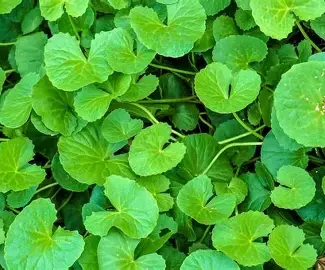
Gotu Kola (Centella asiatica) is a perennial creeping herb in the Apiaceae family (well-known members include ginseng species, eleuthero, English ivy, and various ornamental aralia plants). It thrives in moist environments and spreads across wetlands, rice paddies, and tropical forests throughout Asia, Africa, and parts of Oceania.
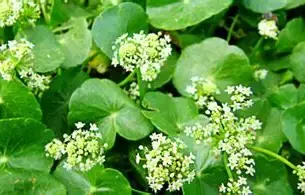
Its rounded, kidney-shaped leaves grow along thin runners close to the ground, forming dense green mats. The plant produces small pink or white flowers that give way to tiny fruits containing seeds.
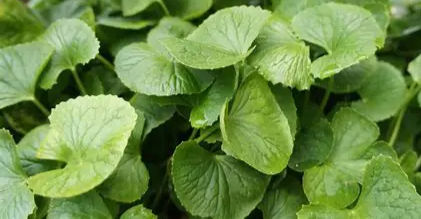
The leaves are the most commonly used medicinal part of the plant and are harvested fresh or dried for teas, tinctures, powders, and topical preparations.
Common names include:
Gotu Kola
Indian Pennywort
Tiger Grass
Mandukaparni (Ayurveda)
Ji Xue Cao (Traditional Chinese Medicine)
The nickname “Tiger Grass” comes from an old observation: wounded tigers were said to roll in patches of the plant to help heal their injuries.

Folklore & Cultural Traditions
Like many of the world’s great medicinal plants, Gotu Kola carries with it not only scientific interest but centuries of folklore—stories of tigers seeking its healing touch, sages drinking its leaves for longevity, and meditators turning to the plant for clarity of mind.
The Legend of the Longevity Sage
One of the most widely shared stories surrounding Gotu Kola comes from Chinese herbal lore. According to tradition, the herbalist Li Ching-Yuen was believed to have lived for more than two centuries, reportedly reaching an age between 197 and 256 years. Historical accounts claim that one of the secrets to his remarkable longevity was the regular consumption of Gotu Kola as a tonic herb.
Although the extreme age claims are debated by historians, the story contributed significantly to the herb’s reputation throughout Asia as a “longevity elixir.” As a result, Gotu Kola became widely associated with vitality, mental clarity, and graceful aging in Chinese herbal traditions.
Tiger Grass Folklore
Across parts of Southeast Asia, Gotu Kola is often called “Tiger Grass.” According to traditional folklore, wounded tigers were observed rolling in patches of the plant after sustaining injuries in the wild. People believed the animals instinctively sought the plant because it helped heal their wounds.
While the story cannot be scientifically confirmed, the legend reinforced the plant’s reputation as a powerful wound-healing herb, a property that modern research has since begun to investigate.
The Herb of Enlightenment
In Ayurvedic tradition, Gotu Kola—known as Mandukaparni—has long been associated with spiritual clarity and meditation. Some traditional accounts suggest that yogis and sages consumed the herb to help calm the mind and support sustained concentration during meditation and contemplative practices.
Because of this association, Gotu Kola became symbolically linked with mental illumination and higher awareness, and is sometimes described in Ayurvedic literature as a herb that nourishes both the brain and the subtle energies of the mind.

The Elephant’s Brain Analogy
Another piece of herbal folklore comes from the plant’s leaf shape. The rounded, slightly folded leaves of Gotu Kola were traditionally compared to the shape of an elephant’s ear or brain. In some cultures this resemblance was interpreted through the Doctrine of Signatures, the historical belief that a plant’s physical appearance hints at its medicinal uses.
Because the leaves resemble folds of the brain, traditional herbalists believed the plant was especially suited for memory, intelligence, and cognitive clarity.
The “Brahmi” Naming Tradition
One of the most intriguing stories surrounding Centella asiatica is its historical connection to the sacred Ayurvedic name “Brahmi.”
In Sanskrit, the word Brahmi is derived from Brahman, a concept referring to universal consciousness or divine intelligence. Plants given this name were traditionally believed to nourish the mind and support higher awareness. Because of Gotu Kola’s long-standing reputation as a brain tonic and meditation herb, it was historically referred to as Brahmi in many Ayurvedic traditions. However, over time another plant, Bacopa monnieri, also became widely known by the same name.
Both plants share similar traditional uses, including:
Supporting memory and learning
Nourishing the nervous system
Enhancing mental clarity
Assisting meditation and contemplative practices
Because their therapeutic actions overlap, the two herbs gradually became associated with the same sacred name in different regions of India and among different herbal traditions.
Today, most Ayurvedic practitioners distinguish the plants as Mandukaparni, referring to Gotu Kola (Centella asiatica), and Brahmi, primarily referring to Bacopa (Bacopa monnieri)
Despite the modern distinction, historical texts and herbal traditions sometimes use the names interchangeably, which has created confusion in herbal literature for centuries.
This shared naming tradition also reflects something deeper about the way ancient healers viewed plants. Rather than focusing solely on botanical classification, many traditional systems grouped herbs by their energetic qualities and effects on the body and mind.
In that sense, the fact that Gotu Kola and Bacopa share the name Brahmi speaks to a long-standing recognition that both plants support clarity, awareness, and the quiet strength of the nervous system.

Medicinal Properties
Few herbs bridge as many healing traditions as Gotu Kola. In Ayurveda, it is classified as a Medhya Rasayana, a rejuvenating herb for the mind and nervous system. It is traditionally used to support:
Memory and cognitive clarity
Nervous exhaustion
Anxiety and restlessness
Longevity and vitality
In Traditional Chinese Medicine, the plant is believed to cool heat and support detoxification while strengthening connective tissue and circulation. Across Southeast Asia, the fresh leaves are commonly eaten as a vegetable or juiced as a tonic beverage believed to promote youthfulness and vitality.
Modern research into Centella asiatica has focused heavily on the herb’s effects on connective tissue, skin regeneration, microcirculation, and the nervous system.
The plant contains a group of triterpenoid compounds known as centelloids, including:
Asiaticoside
Madecassoside
Asiatic acid
Madecassic acid
These compounds are believed to be responsible for many of Gotu Kola’s biological activities.
Skin Regeneration & Wound Healing
One of the most well-documented properties of Gotu Kola is its ability to support skin repair and connective tissue regeneration. Scientific studies suggest that compounds within the plant stimulate collagen production and encourage new blood vessel formation, which are two essential steps in tissue repair.
Research indicates that it may enhance wound healing by increasing the production of collagen, fibroblast growth factors, and vascular endothelial growth factors, which contribute to improved skin regeneration and angiogenesis.
These effects help explain why the herb has long been used for:
Slow-healing wounds
Burns
Scars and keloids
Varicose ulcers
Eczema and psoriasis
Topical preparations of Gotu Kola are now widely studied in dermatology and wound care for their ability to support collagen remodeling and strengthen connective tissue. Traditional herbalists often pair Gotu Kola with other skin-supportive plants such as calendula, plantain, or comfrey to promote healthy tissue repair.

Nervous System Support & Cognitive Health
Gotu Kola has also been revered for centuries as a brain tonic, and modern research is beginning to explore the mechanisms behind this reputation. Laboratory studies show that its extracts may influence signaling pathways in the brain associated with learning and memory. Research has demonstrated that the herb can increase phosphorylation of CREB (cyclic AMP response element binding protein), a molecular pathway involved in neuronal growth and memory formation.
Animal studies also suggest the plant’s triterpenoids may exert neuroprotective effects, potentially supporting neuronal resilience and reducing oxidative stress in the brain.
Human clinical research is still developing. A systematic review of randomized trials found limited evidence for significant cognitive improvement compared to placebo, though some studies observed improvements in mood, alertness, and stress responses.
Traditional herbalists often describe Gotu Kola as a nervine trophorestorative, a plant that nourishes and gradually restores the nervous system rather than providing an immediate stimulating effect.
Circulation & Connective Tissue Support
Herbalists have long used Gotu Kola to support microcirculation and vascular integrity, particularly in conditions involving weakened connective tissue. Research suggests the herb may improve circulation and endothelial function while supporting the extracellular matrix that gives skin and blood vessels their strength.
This makes the plant traditionally useful for:
Varicose veins
Venous insufficiency
Poor circulation
Skin elasticity and aging
These actions likely arise from the plant’s combined anti-inflammatory, antioxidant, and collagen-supportive effects.
Energetics & Herbal Actions
Traditional Western herbalists often describe Gotu Kola as:
Energetics:
Cooling
Slightly bitter
Moistening
Primary actions:
Nervine tonic (Calm the nerves)
Trophorestorative (herb that acts as a nutritive restorative)
Adaptogenic-like support (help the body adapt to stress)
Vulnerary (wound healer)
Anti-inflammatory (reduce inflammation)
Microcirculatory stimulant (circulation of blood in the smallest blood vessels)
The herb is generally gentle and restorative, working best when used consistently over time.
Common Preparations
Gotu Kola can be prepared in a variety of herbal forms:
Infusion (tea)Traditionally prepared using the dried leaf.
TinctureAlcohol extracts are commonly used for nervous system support.
Topical oils and salvesUsed for wounds, scars, and skin repair.
Because many of the plant’s active compounds are triterpenoids, both alcohol extracts and topical preparations are commonly used in herbal medicine.

Spiritual & Metaphysical Associations
Beyond its physical benefits, Gotu Kola has long been regarded as a plant that nourishes the subtle layers of the mind and spirit. In many traditional herbalism systems, certain plants are believed to influence not only the body but also consciousness, emotional balance, and spiritual awareness. Gotu Kola is widely considered one of these quiet allies.
In Ayurvedic tradition, Gotu Kola (Mandukaparni) is associated with the crown chakra, the energetic center linked with wisdom, perception, and connection to higher awareness. Practitioners have historically used the herb to support meditation, mental clarity, and contemplative practices. It is believed to help calm mental turbulence while simultaneously sharpening awareness — a rare combination that encourages both peace and insight.
Traditional herbalists sometimes describe Gotu Kola as a plant of “gentle illumination.” Rather than stimulating the mind in a sharp or forceful way, the herb appears to support gradual clarity and attentiveness. This is one reason it has been historically favored by monks and spiritual practitioners seeking sustained concentration during meditation.
Across parts of Southeast Asia, the plant’s association with longevity and renewal has also given it a reputation as a herb of spiritual rejuvenation. Its creeping, low-growing nature is sometimes symbolically interpreted as a reminder of humility and grounding — that wisdom often grows quietly, close to the earth.
Energetically, many herbalists consider it to carry the following metaphysical qualities:
· Enhances mental clarity and insight
· Supports meditation and contemplative practices
· Encourages calm awareness rather than overstimulation
· Assists emotional integration and reflection
· Promotes energetic renewal and longevity
Some herbal practitioners include Gotu Kola in ritual teas, spiritual baths, or contemplative herbal blends intended to support introspection and mental focus. Like many plants that work gently on the nervous system, Gotu Kola’s deeper effects are often said to unfold gradually over time, strengthening both resilience and awareness in subtle but meaningful ways.
Mabel's Reflections
Gotu Kola teaches a kind of healing that is patient, quiet, and deeply rooted. Its medicine reminds us that restoration does not always arrive with dramatic force. Sometimes it unfolds slowly by strengthening tissues, clarifying the mind, and renewing the subtle currents that move through body and spirit alike.
In the physical realm, this humble creeping plant helps rebuild what has been worn down: skin, connective tissue, circulation, and the delicate pathways of the nervous system. Yet its gifts do not stop there. For centuries, seekers and healers alike have turned to it for another form of nourishment. One that supports awareness, reflection, and the calm steadiness needed for insight to arise.
Growing low to the ground, Gotu Kola quietly blankets the earth in soft green leaves, reminding us that wisdom often grows closest to the soil beneath our feet. Whether taken as a restorative tonic, brewed as a contemplative tea, or prepared in healing salves for the skin, it offers a simple yet profound lesson:
Healing is not always about becoming something new. Sometimes it is about remembering the wholeness that was always there and allowing it to grow again, leaf by leaf.
Bibliography
Acharya, D., & Shrivastava, A. (2008).Indigenous herbal medicines: Tribal formulations and traditional herbal practices. Jaipur, India: Aavishkar Publishers.
Arribas-López, E., Zand, N., Ojo, O., Snowden, M. J., & Kochhar, T. (2022).The effect of Centella asiatica on wound healing: A systematic review. International Journal of Environmental Research and Public Health, 19(6), 3266.
Bensky, D., Clavey, S., & Stöger, E. (2004).Chinese herbal medicine: Materia medica (3rd ed.). Seattle, WA: Eastland Press.
Gofir, A., Wibowo, S., & Hakimi, M.Potential neurological applications of Centella asiatica. Indonesian Journal of Pharmacology and Therapy.
Gray, N. E., Alcazar Magana, A., Lak, P., Wright, K. M., Quinn, J., Stevens, J. F., & Maier, C. S. (2017).Centella asiatica: Phytochemistry and mechanisms underlying cognitive enhancement and neuroprotection. Scientific Reports, 7, 10646.
Lad, V. (2002).The complete book of Ayurvedic home remedies. New York, NY: Harmony Books.
Pole, S. (2013).Ayurvedic medicine: The principles of traditional practice (2nd ed.). London, UK: Singing Dragon.
Rao, V. S., & Rao, A. (2015).Medicinal plants of Asia and the Pacific. Boca Raton, FL: CRC Press.
Tilgner, S. (2009).Herbal medicine from the heart of the Earth. Creswell, OR: Wise Acres Herbal.
Witkowska, K., Paczkowska-Walendowska, M., Garbiec, E., & Cielecka-Piontek, J. (2024).Topical application of Centella asiatica in wound healing: Mechanisms and clinical efficacy. Pharmaceutics.
Wood, M. (2008).The Earthwise herbal: A complete guide to Old World medicinal plants. Berkeley, CA: North Atlantic Books.
Xu, Y., Cao, Z., Khan, I., & Luo, Y. (2008).Gotu kola extract enhances phosphorylation of CREB in neuronal cells. Journal of Alzheimer’s Disease.
Pole, S. (2013).Ayurvedic medicine: The principles of traditional practice (2nd ed.). London, UK: Singing Dragon.
Wood, M. (2008).The Earthwise herbal: A complete guide to Old World medicinal plants. Berkeley, CA: North Atlantic Books.
Upton, R. (Ed.). (2016).Gotu kola leaf (Centella asiatica): Standards of analysis, quality control, and therapeutics. American Herbal Pharmacopoeia.
Acharya, D., & Shrivastava, A. (2008).Indigenous herbal medicines: Tribal formulations and traditional herbal practices. Jaipur, India: Aavishkar Publishers.


Comments